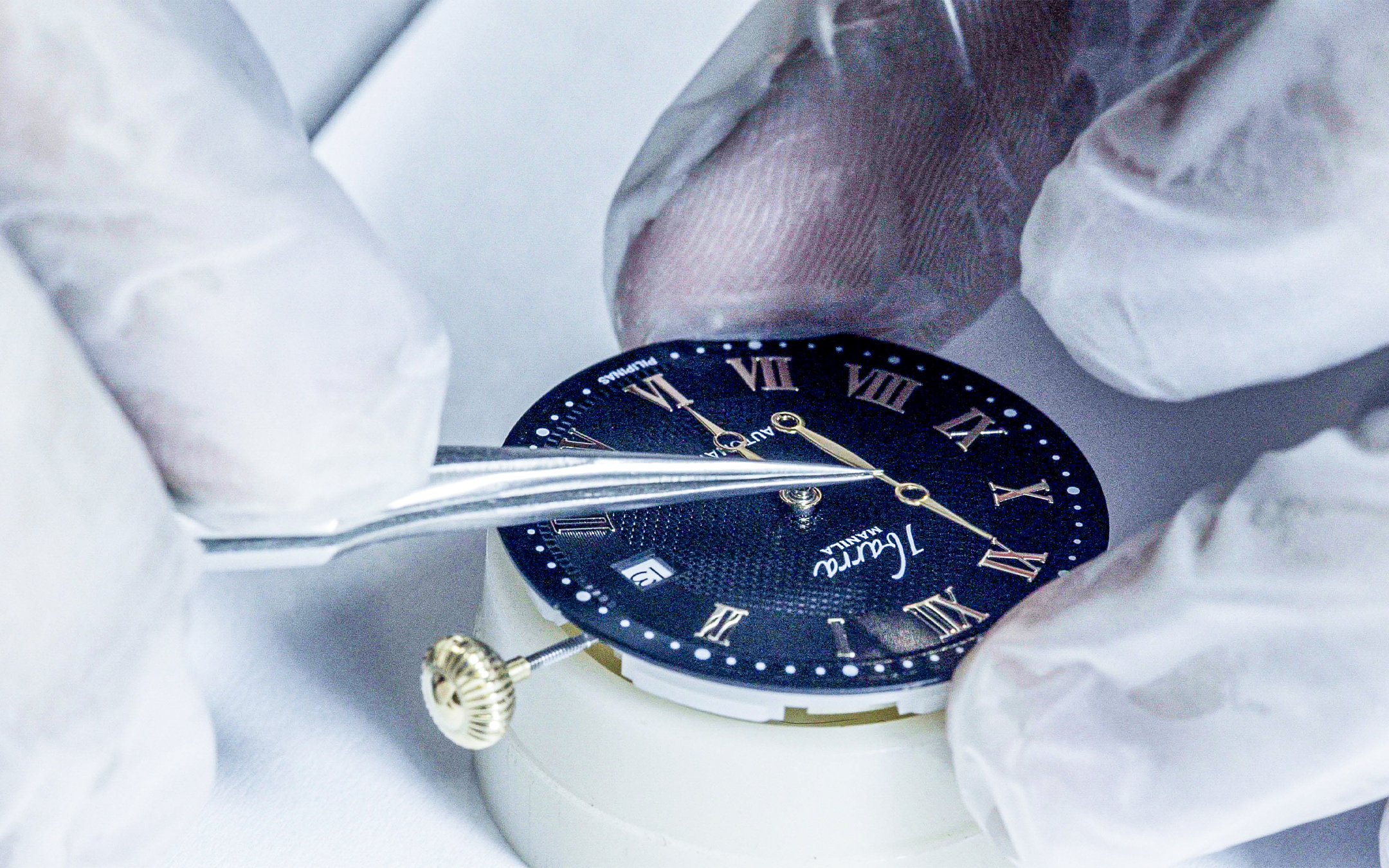
Ibarra was founded in Manila in 2014 — the Philippines' first modern watch brand to design and assemble timepieces locally. The name was drawn from the idealistic hero of José Rizal's novels: a reminder that time is not a neutral resource. What we make of it is the question.
The brief was clear from the beginning: make watches that are timeless without being frozen in the past. Elegant without announcing themselves. Filipino in soul, universal in appeal. Watches that a person could pass on.
The first serious piece came in 2016 — the Plaridel, a mechanical dress watch with a high-domed acrylic crystal and Breguet hands, built to feel like a watch that had always existed. The Mariano followed, and quickly became Ibarra's best-selling watch — the clearest expression of what the brand believes a timepiece should be: considered, wearable, and built to outlast the moment it was made for. In 2017, the Plaridel Automatic was worn and promoted by the 16th President of the Philippines — and that same year, Ibarra was selected as the Official Timepiece of the ASEAN 50th Anniversary Summit, presented to heads of state and ministers of the Association of Southeast Asian Nations.
The years that followed brought new pieces and new chapters. The Soldado — a vintage field watch worn without pretence, inspired by the famous Dirty Dozen. The Sucesos — a tribute to Dr. José Rizal, issued on his 158th birth anniversary, the first time Ibarra made a dress watch with an antique-inspired design. This timepiece unfortunately came to a halt in production due to the global health crisis. And in 2019, the honour of being named the Official Commemorative Timepiece of the 30th Southeast Asian Games.
When the world slowed, Ibarra continued working quietly. During a period of reduced operations, the house contributed its experience to fellow Filipino watchmakers — helping to create the Odyssey and Asteri models in collaboration with Argos Philippines. It was the kind of work that does not make headlines but matters to the craft.
Operations resumed in full with the Trofeo — a quartz dress watch in the Art Deco tradition, its proportions drawn from the watches of the 1970s and 1980s. A Limited Edition Trofeo 1898, created in collaboration with the Ayala Museum, carried a Sun and Stars motif rendered in enamel — a tribute to nationhood on the dial. The Mariano Ver. 2 followed: the mechanical heart of the house, renewed for a new chapter.
In 2024, Ibarra marked its first decade. The same year, the house announced Deco Ibarra — a collector line born from a design partnership with Moreno Watch Studio, the independent Tokyo atelier of the brand's founder. Its first piece, the Gran Luz, was selected as a participant in the Grand Prix d'Horlogerie de Genève 2025 — horology's most recognised design award. The Gran Luz '56 followed: a commemorative edition marking seventy years of Philippines-Japan diplomatic relations.
Ten years. One conviction. The same watch it has always been trying to make.